Moving to Suffolk, Smithfield, or Carrollton VA? Here's How to Choose (2026)
If you're looking at homes in Hampton Roads and starting to wonder whether Suffolk, Smithfield, or Carrollton might be a better fit than Virginia Beach or Chesapeake, you're not alone — and you're asking the right question. These three areas west of the core Southside cities are attracting more buyer interest in 2026 than at any point in recent memory, and the reasons are practical: more space, newer construction, larger lots, and a different pace of daily life. But "more house for your money" only tells half the story. The other half — the part that determines whether you love the move or regret it — comes down to lifestyle fit, commute tolerance, and knowing what you actually value most.
I'm Jason Edwards, a Realtor with eXp Realty and a former Navy Senior Chief. I specialize in helping buyers — especially military families and first-time buyers — find the right area in Hampton Roads before they start touring homes. I work with people relocating to this region every week, and the Suffolk-Smithfield-Carrollton conversation comes up constantly. Here's the honest breakdown I give my clients.
Why Are So Many Buyers Looking West in 2026?
This isn't a trend driven by TikTok or viral real estate content. It's driven by math.
Federal civilian jobs in Hampton Roads took a hit in 2025, with roughly 6,300 positions lost. At the same time, BAH rates increased, insurance premiums climbed, property taxes went up across nearly every city, and mortgage rates are still hovering around six and a half percent.
Buyers aren't moving west because it's trendy. They're moving west because the original plan — buying in Virginia Beach or Chesapeake at a price point that made sense — stopped working for a lot of people. So they started asking a different question: Where can I get more of what I actually want, for the budget I actually have?
That question is leading a growing number of buyers toward Suffolk, Smithfield, and Carrollton.
Suffolk VA: The Big Swing Option
Suffolk is typically where the westward conversation starts, and for good reason.
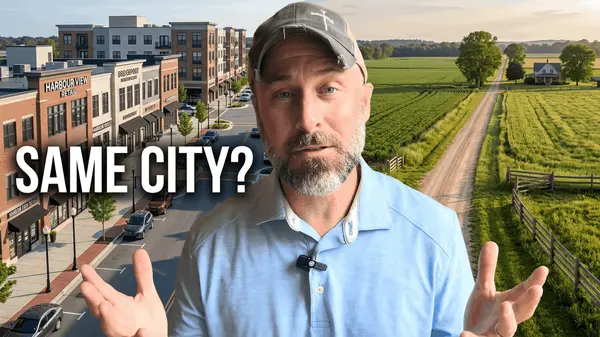
It's the largest city in Virginia by land area — bigger than Virginia Beach, bigger than Chesapeake. That size means Suffolk is not one experience. North Suffolk and Harbour View feel very different from the newer developments off Route 10, which feel very different from the more rural pockets near Holland or Whaleyville. When someone says "I'm looking in Suffolk," the first question I ask is: which Suffolk?
Year-to-date in 2026, Suffolk's median sale price is around $390,000. That's meaningfully less than Chesapeake or Virginia Beach, and in many cases, buyers are getting a newer home with more square footage and a bigger lot at that price point.
Suffolk is also a city investing in its own growth. The Port 460 project is adding long-term economic momentum — new development, new infrastructure, new retail.
Who Suffolk is for: The buyer who wants the house. The open kitchen, the three-car garage, the yard the dog can actually run in. It's also for the buyer who's burned out on the density and pace of the busier parts of Hampton Roads.
The tradeoff: Suffolk is not a cheat code. If you work at Naval Station Norfolk or the Shipyard, you are adding drive time. And growth brings its own challenges — roads, infrastructure, and day-to-day capacity all have to keep up with new rooftops.
[Internal link suggestion: Link to your "Should You Live in Suffolk or Chesapeake?" blog post here if you have one on Lofty.]
Smithfield VA: The Feel Factor
If Suffolk wins on flexibility and variety, Smithfield wins on feel.
There's a small-town character to Smithfield that can't be manufactured. The historic downtown, the waterfront along the Pagan River, the ability to have an actual conversation at the local coffee shop without it feeling rushed — these are real, and they matter more than a lot of buyers expect.
Smithfield tends to attract buyers who aren't just shopping square footage. They're shopping for a pace of life. They want charm with their convenience, and they want to feel a little removed from the intensity of Virginia Beach or Chesapeake without feeling disconnected from everything.
The pricing surprise: Isle of Wight County (which includes both Smithfield and Carrollton) has a year-to-date median sale price of about $392,000. That's nearly identical to Suffolk. Heading west does not automatically mean cheaper — sometimes it means you're paying the same or more for a different version of life: more land, newer product, and a lifestyle that's harder to find closer in.
Who Smithfield is NOT for: If you need everything within five minutes — every grocery option, every retail chain, every restaurant — Smithfield is going to feel limiting. It rewards buyers who actually want what it offers, not buyers chasing a map pin.
Carrollton VA: The Quiet Middle Ground
Carrollton gets lumped in with Smithfield constantly, but they are not the same experience.
Carrollton is what I call the "middle-ground play." You're still in Isle of Wight County. You're still part of that westward conversation. But geographically, Carrollton feels more connected to the Peninsula. The James River Bridge puts Newport News within easy reach. You're also tied into the Southside through Route 17 and into Suffolk and Chesapeake — so if your routine pulls you in multiple directions, Carrollton positions you well for both.
This is where I see a lot of military families landing, especially people attached to commands that have them moving between the Southside and the Peninsula. Nike Park is right there — one of the most underrated parks in the region — and newer-construction neighborhoods give buyers the space and product they're looking for without committing fully to small-town life.
Who Carrollton is for: The buyer who wants some of that westward breathing room but still wants to feel reasonably positioned for everywhere they actually go.
The tradeoff: You're going to drive. The James River Bridge can back up. Route 17 can back up. Drive your commute on a Tuesday morning before you write an offer.
The 5 Questions You Need to Answer Before Moving West
This is the framework I use with every buyer considering Suffolk, Smithfield, or Carrollton. If you can't answer these honestly, you're not ready to write an offer:
1. What does a normal Tuesday look like? Not Saturday. Tuesday. Where are you driving? How many trips?
2. How often do you actually go to the places you think you'll go? If you say you want to be near the beach but you only went four times last year, you don't need to be near the beach.
3. What is your real commute tolerance? Not what you think you can handle. What you've actually done without resenting the decision.
4. How much do you value quiet versus convenience? These are usually opposites. You can have a lot of one or a lot of the other, rarely both.
5. Are you buying for the next two years or the next ten? Military buyers and forever-home buyers have different calculations. PCS in three years means resale matters more than personal preference.
How to Actually Decide: House vs Feel vs Balance
Here's the simplest framework:
If the house is your top priority — square footage, newer construction, the most home for the money — Suffolk usually wins.
If the feel is your top priority — slower pace, small-town character, charm — Smithfield usually wins.
If balance is your top priority — extra space, Peninsula access, reasonable pull toward the Southside — Carrollton usually wins.
There is no "best." There is only what fits the actual life you live, the commute you're willing to drive, and the version of home that makes sense for the next five to ten years.
[Internal link suggestion: Link to your True Cost of Homeownership video/blog post here if available on Lofty.]
The Financial Reality Nobody Mentions
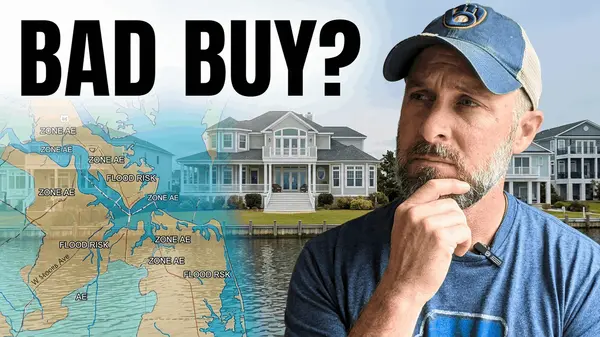
Property tax rates, insurance premiums, flood zone designations, HOA structures, and commute fuel costs all change when you move west. A $500,000 home does not cost the same to own in Suffolk as it does in Isle of Wight as it does in Chesapeake.
I built a full breakdown of the true monthly cost of homeownership in Hampton Roads in a separate video — you can watch that here. If you're seriously comparing areas, that's the companion piece to this guide.
When I work with relocation clients, I build out a complete true-cost monthly payment for every home they're considering. Not just principal and interest — the whole picture.
[Internal link suggestion: Link to your True Cost Buyer Worksheet landing page here.]
Ready to Figure Out Where You Fit?
If you're relocating to Hampton Roads or just trying to figure out which part of the region actually fits your life, I'd love to help. I put together a free Relocation Guide that walks you through the different areas, the tradeoffs, and the things that tend to surprise people after they move here:
📥 Grab the free Relocation Guide: https://realtorjedwards.com/relocation-guide
And when you're ready to talk specifics — your budget, your commute, your timeline — reach out directly. No pressure, no sales pitch. Just a real conversation about what fits your life.
📅 Schedule a Call: https://calendly.com/jedwrds
Jason Edwards is a Realtor with eXp Realty specializing in Hampton Roads, Virginia — including Suffolk, Chesapeake, Portsmouth, Norfolk, and Virginia Beach. A former Navy Senior Chief (ATCS), Jason focuses on helping military families, veterans, and first-time homebuyers navigate the Hampton Roads market with honest, advisor-first guidance.
Recent Posts