How to Write a Competitive VA Offer Without Taking Reckless Risks
A VA loan can be one of the strongest home-financing tools available to military members and veterans.
But when buyers start competing for homes, they sometimes make one of two mistakes.
They either assume their VA loan automatically makes their offer less attractive, or they overcorrect by waiving protections and promising more cash than they’re truly comfortable bringing to closing.
Neither approach is especially helpful.
A strong VA offer isn’t necessarily the offer with the fewest protections or the largest unknown financial commitment. It’s the strongest offer the buyer can still responsibly perform if the appraisal, inspection, and closing costs all come in at the wrong end of the range.
Here’s how to think through that decision when buying a home in Hampton Roads.
Sellers Compare the Entire Offer
A seller usually isn’t evaluating your loan type in isolation.
They’re comparing the full package, including:
- Purchase price
- Financing
- Seller-paid closing costs
- Earnest money
- Closing date
- Possession terms
- Inspection language
- Appraisal exposure
- Confidence that the transaction will close
A VA offer can lose because the seller or listing agent has concerns about VA financing.
It can also lose because the buyer is asking for significant closing-cost assistance, the closing timeline doesn’t work for the seller, the lender isn’t responsive, or another offer simply feels more certain.
That changes the question.
Instead of asking, “Will the seller accept a VA loan?” ask:
How does my entire offer compare with the seller’s other options?
That gives you more ways to compete without immediately accepting more financial risk.
Strengthen the Offer Before Adding Risk
Before considering appraisal guarantees or reducing inspection protection, strengthen the lower-risk parts of the offer first.
Submit a clean, complete offer
Missing pages, blank sections, incomplete signatures, or unclear terms create unnecessary doubt.
That sounds basic, but in a multiple-offer situation, the seller may be comparing several packages at once. A clean offer is easier to understand and easier to trust.
Use a responsive lender
Your lender’s performance becomes part of your offer.
A strong approval letter helps, but the lender should also be prepared to answer the listing agent’s questions and explain how thoroughly the buyer has been reviewed.
Ask whether your lender has reviewed your income, assets, credit, and supporting documentation—not simply generated a letter after a brief conversation.
Use a realistic timeline
The fastest possible closing date isn’t always the strongest date.
It needs to be a date the lender, closing company, and buyer can realistically meet.
Seller timing can matter too. Some sellers need a particular closing date or brief possession period after closing. When the buyer can reasonably accommodate that, flexibility may strengthen the offer without increasing the price.
Don’t negotiate over things you don’t need
Don’t ask for personal property simply because it happens to be in the home.
If the washer and dryer don’t matter to you, don’t create an unnecessary negotiation point.
Competitiveness isn’t limited to offering more money. Sometimes the strongest improvement is removing uncertainty.
Understand What an Appraisal Guarantee Really Means
Offering above the listing price and guaranteeing an appraisal shortage aren’t the same thing.
A buyer can offer above asking without automatically agreeing to cover a low appraisal. The actual obligation depends on the contract language.
There’s also a major difference between:
- A defined appraisal guarantee
- Agreeing to pay the contract price regardless of appraisal
- Agreeing to cover an unlimited appraisal shortage
Defined exposure gives the buyer a ceiling.
Unlimited exposure doesn’t.
A common appraisal-guarantee structure might say that if the property doesn’t appraise for the contract price, the buyer agrees to pay up to a specific amount above the appraised value, without exceeding the ratified purchase price.
The key words are:
Up to a specific amount.
That amount should be calculated before the offer is submitted.
An Appraisal Gap Requires Additional Cash
Consider this example:
- Contract price: $425,000
- Appraised value: $415,000
- Appraisal gap: $10,000
If the buyer agreed to cover up to $10,000 above the appraised value, the buyer is responsible for that shortage.
That $10,000 isn’t added to the VA loan.
The lender bases the loan on the appraised value—not the higher contract price created by the appraisal guarantee.
That means the $10,000 is additional cash the buyer must bring to closing, on top of normal closing costs.
Now imagine the appraisal comes in $25,000 low.
A defined $10,000 guarantee limits the buyer’s agreed exposure to $10,000. An unlimited guarantee can create a much larger cash obligation than the buyer expected.
Before offering any appraisal guarantee, calculate:
- Cash available for closing
- Expected closing costs
- Maximum appraisal-gap amount
- Minimum reserves after closing
- Immediate repair exposure
- Moving expenses
- The source of the appraisal-gap funds
Don’t promise to pay a number that doesn’t exist yet unless you’re genuinely prepared for the worst realistic outcome.
Don’t Assume VA Protections Erase Other Promises
VA loans include important appraisal protections.
However, buyers shouldn’t assume those protections automatically cancel every separate promise added to the contract.
The exact language matters.
Before agreeing to an appraisal guarantee, the buyer should understand:
- The maximum additional cash required
- What protections remain
- What happens if the appraisal is much lower than expected
- Whether the transaction can proceed under the agreed terms
- How the lender will calculate the loan amount
The real estate agent and lender should walk the buyer through the obligation before the offer is signed.
Keep Meaningful Inspection Protection
Competing doesn’t automatically require waiving the home inspection.
There’s a large middle ground between a full repair negotiation and having no inspection contingency at all.
One approach is to keep the inspection as a contingency so the buyer can decide whether to proceed, while making clear that the buyer doesn’t intend to submit a long list of minor repair requests.
The buyer may limit any repair request to major concerns or defects.
That can tell the seller:
- The buyer still intends to investigate the property
- The buyer isn’t planning to renegotiate over cosmetic items
- The buyer wants protection against significant unknown conditions
That distinction matters in Hampton Roads, where buyers frequently need to evaluate:
- Crawlspaces
- Moisture
- Roof condition
- HVAC systems
- Plumbing
- Electrical systems
- Structural concerns
- VA Minimum Property Requirements
The inspection is still a decision point.
It helps the buyer understand what they’re agreeing to own.
Be Careful With Undefined Repair Commitments
Buyers should be cautious with language saying they’ll pay for “any and all” appraisal-required repairs.
That commitment sounds simple before the appraisal.
It may not remain simple after a roof, structural, safety, electrical, or moisture issue is identified.
The buyer is agreeing to a category of repairs without knowing the final scope or cost.
A useful question is:
What problem am I agreeing to accept before I know how big it is?
Defined risk is easier to evaluate than open-ended risk.
Build a Risk Budget Before You Fall in Love With the House
Before writing an offer, establish your personal risk budget.
This is the amount of financial and property-condition uncertainty you can accept without putting the rest of your life under strain.
Define:
- Maximum comfortable monthly payment
- Maximum purchase price
- Cash available for closing
- Minimum reserves after closing
- Maximum appraisal guarantee
- Immediate repair exposure
- Protections you won’t give up
- Walk-away point
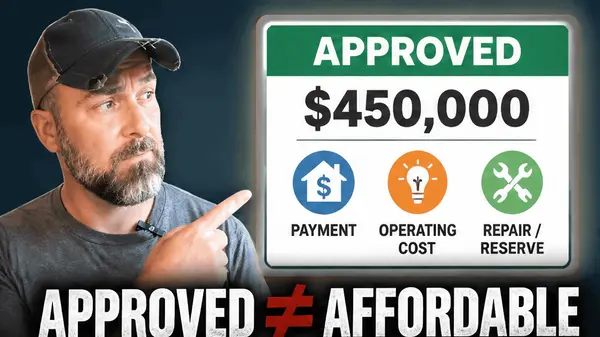
The monthly payment should be the amount you’re comfortable living with—not simply the highest amount a lender says you qualify for.
Your reserve target shouldn’t be zero either.
Homes have a habit of needing something shortly after the new owner has spent money on moving, closing, furniture, and the other seventeen things nobody remembered to budget for.
Run the Worst-Case Offer Test
Before submitting the offer, ask:
If every extra promise in this offer gets triggered, am I still comfortable buying the house?
Consider what happens if:
- The appraisal comes in low
- You need the full appraisal-guarantee amount
- The inspection uncovers a major issue
- The seller doesn’t agree to repairs
- Closing costs reach the high end of the estimate
- Two or three of those things happen at the same time
Don’t build the offer around the best-case scenario.
Build it around the realistic worst-case scenario you’ve already agreed to.
If that version makes you immediately regret the offer, adjust it before submission.
That may mean:
- Lowering the appraisal guarantee
- Keeping stronger inspection protection
- Reducing the purchase price
- Retaining more cash
- Walking away from that particular house
The Goal Isn’t to Win Every House
A well-built VA offer can still lose.
Another buyer may have more cash, accept greater risk, offer better timing, or simply value the property more.
That doesn’t automatically mean the VA buyer made a mistake.
The goal isn’t to win every house.
The goal is to write an offer the buyer can comfortably perform without spending the contract period hoping nothing goes wrong.
Losing a house can be disappointing.
Winning one with terms you can’t comfortably live with is worse.
For a deeper walkthrough of VA financing, appraisals, inspections, and closing, download the Complete Veterans Buyers Guide below.
https://realtorjedwards.com/va-loan-guide
FAQs
Can a VA buyer offer more than the asking price?
Yes. A VA buyer can offer more than the listing price. Offering above asking doesn’t automatically mean the buyer has agreed to cover a low appraisal. That depends on the specific contract language.
What happens if a VA appraisal comes in below the contract price?
The buyer and seller may renegotiate, the seller may reduce the price, the buyer may use applicable appraisal protections, or the buyer may pay an agreed amount above the appraised value. The exact options depend on the contract and any additional appraisal-guarantee language.
Can an appraisal gap be financed with a VA loan?
No. The portion the buyer agreed to pay above the appraised value isn’t added to the VA loan. It’s additional cash the buyer must bring to closing, on top of closing costs.
What is a defined appraisal guarantee?
A defined appraisal guarantee limits the buyer’s obligation to a specific maximum amount above the appraised value, without exceeding the ratified purchase price. It gives the buyer a known ceiling instead of unlimited exposure.
Should a VA buyer waive the home inspection to compete?
Not automatically. Buyers may have options between a full repair negotiation and completely waiving the inspection. One approach is to retain the inspection as a contingency while limiting repair requests to major concerns or defects.
What are common inspection concerns in Hampton Roads?
Common areas of focus include crawlspaces, moisture, roofs, HVAC systems, plumbing, electrical systems, structural conditions, and items that may affect VA Minimum Property Requirements.
Can a buyer agree to pay for appraisal-required repairs?
A buyer may agree to cover certain repairs, but broad language covering “any and all” required repairs creates undefined exposure. Buyers should understand the possible scope, cost, financing impact, and contract consequences before agreeing.
How can a VA buyer make an offer stronger without offering more money?
A buyer can submit a clean offer, use a responsive lender, provide a realistic closing timeline, accommodate seller timing when practical, offer meaningful earnest money, and avoid unnecessary requests.
What is a home-buying risk budget?
A risk budget defines the maximum monthly payment, purchase price, cash-to-close amount, appraisal guarantee, repair exposure, minimum reserves, non-negotiable protections, and walk-away point a buyer can comfortably accept.
What is the worst-case offer test?
The buyer asks whether they’d still be comfortable completing the purchase if every extra term in the offer were activated at the same time. If the answer is no, the offer should be adjusted before submission.
Recent Posts