5 Mistakes First-Time VA Buyers Make in Hampton Roads (And How to Avoid Them)
If you’re a first-time VA buyer looking at homes in Hampton Roads, Virginia, there are five common mistakes that can cost you thousands of dollars, delay your closing, or land you in a home you regret. This guide breaks down each one with real examples from the Hampton Roads market — including what to know about VA appraisals, the Tidewater process, flood zone designations, and why your choice of agent matters more than you think.
Hampton Roads is one of the most active military real estate markets in the country. With Naval Station Norfolk, NAS Oceana, Joint Expeditionary Base Little Creek, and more than a dozen other installations across the region, VA loans are a huge part of how homes get bought and sold here. But being eligible for a VA loan and being prepared to use one effectively are two different things. Here are the five mistakes I see most often — and how to sidestep every one of them.
Mistake #1: Not Getting Pre-Approved Before You Start Shopping
This is the most common and the most heartbreaking mistake. You start browsing homes online, fall in love with a property, and then discover you either can’t qualify for that price range or you’re not ready to make an offer while another buyer — who was already pre-approved — gets the home under contract.
There’s an important distinction here: pre-qualification is not the same as pre-approval. A pre-qualification is a preliminary estimate based on what you tell the lender. A pre-approval means the lender has verified your credit, income, employment, and debt — and is confident in how much they’ll lend you. That’s what sellers and listing agents want to see.
With a VA loan, you’ll also need your Certificate of Eligibility (COE) and a clear understanding of your entitlement, especially if you’ve used your VA benefit before. A good local VA lender will handle the COE for you, but make sure it’s done before you start house hunting — not after you’ve found “the one.”
Get my FREE Buyer's Guide here.
Mistake #2: Ignoring the Commute and Local Geography
Hampton Roads is a collection of cities separated by water. Your daily commute will likely involve tunnels, bridges, or both — and if you pick the wrong location relative to your workplace, what looks like a twenty-minute drive on a Saturday can turn into an hour during rush hour.
The Downtown Tunnel connects Norfolk and Portsmouth. The Jordan Bridge is a toll bridge option in Chesapeake. The Hampton Roads Bridge-Tunnel connects the Peninsula to the Southside and is undergoing a major expansion. Each of these chokepoints affects traffic flow across the entire region when something goes wrong.
If you’re commuting to Naval Station Norfolk from Suffolk, for example, you could be looking at thirty-five to fifty minutes on a normal day. From parts of Virginia Beach, it might be twenty to thirty minutes. The key is to drive the commute during rush hour before you commit, or have your agent give you an honest breakdown if you’re buying from out of state.
Check the Flood Zone Designation Before You Offer
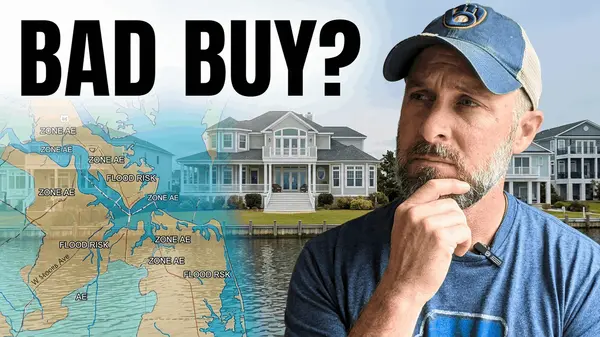
Every property in Hampton Roads is in a flood zone — the question is which designation it carries. Zone X is considered minimal risk and typically does not require flood insurance. But higher-risk designations like Zone A, AE, or VE mean mandatory flood insurance when you’re using a VA loan, and that can add several hundred dollars per month to your housing costs.
This is something to check before you write an offer, not after. You can look up any property’s flood zone designation on FEMA’s flood map website, and your agent should be helping you evaluate this as part of your due diligence on any property you’re considering.
For other hidden costs and to figure out what it costs to actually live here, download my free Cost & Commute Calculator here,
Mistake #3: Not Understanding What a VA Appraisal Actually Does
When you use a VA loan, the VA requires an independent appraisal of the property to determine fair market value and confirm the home meets the VA’s Minimum Property Requirements (MPRs). This is not the same as a home inspection.
If the appraisal comes in below the contract price, your lender won’t lend more than the appraised value. The VA guarantees the loan, but it’s the lender putting up the money. That gap between the appraised value and the purchase price has to be resolved — either through renegotiation, the buyer covering the difference, or the deal falling through.
In Hampton Roads, we have a VA-specific procedure called the Tidewater initiative. When the appraiser believes the value will come in low, they notify the lender, who notifies the buyer’s agent. At that point, the agent can submit additional comparable sales data to support the contract price. Having an agent who knows the local market at a granular level can make the difference between saving the deal and losing it.
The MPR side protects buyers too. The VA wants to make sure the home is safe, sanitary, and structurally sound. If the appraiser flags issues like a deteriorating roof or safety hazards, repairs may be required before the loan can close. This is a protection, not a hurdle — but it catches first-time buyers off guard if they’re not expecting it.
One more thing worth noting: if you have a VA disability rating, you may be exempt from the VA funding fee. A lot of veterans and active duty members don’t realize this, and it can save you thousands at closing.
Mistake #4: Skipping the Home Inspection
The VA appraisal checks value and basic habitability. A home inspection is a deep dive into the actual condition of the property — HVAC, electrical, plumbing, foundation, roof, drainage, and more. They are not the same thing, and one does not replace the other.
In Hampton Roads specifically, there are a few things a home inspection can catch that are particularly important. Older homes in parts of Norfolk, Portsmouth, and Virginia Beach may have polybutylene pipes — a type of plastic plumbing from the late seventies through the mid-nineties that’s known to fail. Some insurance companies won’t insure a home with polybutylene pipes, and replacement can cost five to fifteen thousand dollars.
Crawl spaces are another area of concern in our humid, coastal climate. Moisture problems, wood destroying fungus, termites, and wood rot can develop quietly under a home, and a good inspector will check for all of it. Aging HVAC systems and older electrical panels are also common in the area’s housing stock and worth knowing about before you close.
If an inspection turns up issues, that’s not necessarily a reason to walk away — it’s a reason to negotiate. You can ask for repairs, request a credit, or renegotiate the price. The inspection gives you leverage and information, and both of those are worth having.
Mistake #5: Not Finding the Right Fit in an Agent
Hampton Roads is a military market, and VA loans are extremely prevalent here. The question isn’t whether an agent can handle a VA transaction — it’s whether their approach fits what you need as a first-time buyer.
When you’re making one of the biggest financial decisions of your life, especially in a market you may have never lived in, you want someone who will take the time to educate you, walk you through every step, and make sure you feel confident in your decisions. Look for someone who knows the local market at a neighborhood level — commute patterns, flood zone designations, the nuances that affect daily life. Ask whether they’ll educate you or just show you houses. Ask if they’ll be honest when a home isn’t the right fit.
Your agent’s negotiation skills also directly impact your bottom line. I recently helped a first-time VA buyer negotiate $17,400 in seller concessions plus a home warranty. That buyer also had a VA disability rating, which meant he was exempt from the funding fee. The right representation and the right strategy can save you tens of thousands of dollars. When you’re interviewing agents, ask about their process, their negotiation approach, and what sets them apart. The right fit makes all the difference.
Ready to Start the Conversation?
If you’re a first-time VA buyer looking at Hampton Roads, I’d love to help you navigate the process. I’m a former Navy Senior Chief who built my real estate business around educating buyers — not selling them. My goal is to make sure you feel confident, informed, and protected every step of the way.
Grab my free VA Loan Guide for a complete walkthrough of the VA loan process: https://realtorjedwards.com/va-loan-guide
Or schedule a no-pressure call to talk about your situation: https://calendly.com/jedwrds
Recent Posts