What $450K Actually Buys You in Hampton Roads
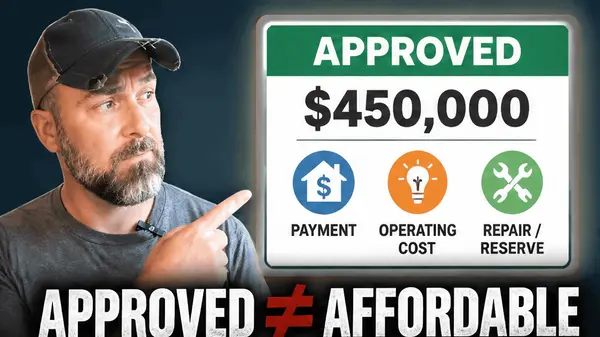
A $450,000 home budget sounds pretty specific.
Until you start looking around Hampton Roads.
Move that same budget from Virginia Beach to Suffolk to Hampton, and you can end up comparing homes with dramatically different ages, sizes, features, and locations.
That's why I don't think buyers should start their Hampton Roads home search by asking:
“Where can I get the most house for my money?”
There's a better question:
“Which combination of house and location works best for the way I'm actually going to live?”
To show you what I mean, I pulled recent detached-home sales across the seven major Hampton Roads cities between roughly $425,000 and $475,000.
Then I selected three actual closed sales around $450,000.
They're not meant to represent every home you'll find in these cities. They're examples of just how different the choices can become when you move the same budget around Hampton Roads.
$450K in Virginia Beach: Older Doesn't Necessarily Mean Outdated
The first example is 4060 W Colonial Parkway in Virginia Beach.
It sold for $450,000.
The home offered:
- 2,002 square feet
- 3 bedrooms
- 3 full bathrooms
- Built in 1969
- No HOA
Seeing “1969” might immediately make some buyers think they're looking at a fixer-upper.
That's not necessarily the case.
This property had an updated kitchen and primary suite, newer windows, replaced cast-iron plumbing, a fenced yard, patio, pergola, and workshop shed.
And that illustrates an important distinction.
The decision isn't always:
older bad house vs. newer good house.
It may be:
updated older home in one location vs. newer or larger home somewhere else.
Those are very different decisions.
About $460K in Suffolk: What Changes When You Move West?
Now move the search into Suffolk.
1516 Elderberry Road in Parkside at Bennetts Creek sold for $460,000.
For about $10,000 more than the Virginia Beach example, the home offered:
- 2,260 square feet
- 3 bedrooms
- 2.5 bathrooms
- Built in 2007
- 2-car garage
- HOA with community amenities
That's roughly 250 additional square feet and a home almost 40 years newer than the Virginia Beach example.
There was also an updated primary bathroom, newer appliances, a fenced yard, and an upstairs flex room.
For the buyer who wants newer construction, a garage, or additional space, that can make Suffolk worth considering.
But those features don't come without a tradeoff.
The location changed too.
If you're commuting somewhere else in Hampton Roads every day, that matters.
A larger, newer house doesn't feel quite as inexpensive if the location gives you a daily commute you can't stand.
$450K in Hampton: More Than 600 Additional Square Feet
Then there's 3 Nicole Court in Hampton.
It also sold for $450,000.
The home offered:
- 2,662 square feet
- 4 bedrooms
- 3.5 bathrooms
- Built in 2003
- Bonus room over the garage with a full bathroom
It also had a new roof, new flooring and fresh paint.
Now compare that with the Virginia Beach example.
Both sold for $450,000.
But the Hampton home provided approximately 660 additional square feet and was built more than three decades later.
If you're comparing nothing but price, age, and square footage, Hampton looks like the obvious winner.
And that's exactly where the comparison gets more interesting.
The Biggest House Isn't Automatically the Best Value
Let's say you work at or near Langley.
A Hampton home may make plenty of sense because your job and your home are already on the same side of the water.
Now imagine you're headed to NAS Oceana or Dam Neck every day.
Same house.
Same $450,000 purchase price.
Completely different lifestyle calculation.
Naval Station Norfolk creates another calculation.
That's one of the things relocation buyers often don't appreciate until they've spent some time here.
Mileage can be misleading in Hampton Roads.
Water, bridges, tunnels, traffic patterns, and limited alternate routes can make two places that appear relatively close on a map function very differently in real life.
So the question isn't simply:
“Where does $450K buy the most square footage?”
It's:
“What am I willing to trade to get more house?”
Four Questions to Answer Before Choosing Where to Search
Before falling in love with listings, I'd answer four questions.
1. Where do you actually need to be most days?
Start with your real life.
Where do you work? Where will you regularly need to drive?
That gives your home search an anchor.
2. What's between your home and that destination?
In Hampton Roads, look beyond mileage.
Does your normal commute require a bridge or tunnel?
Do you have reasonable alternate routes?
Does your location put you on the same side of the water as the places you'll visit most?
These questions can matter just as much as the number of miles between two addresses.
3. What are you getting in exchange for the location compromise?
Maybe you're willing to drive farther.
Fine.
But what are you getting for it?
Another bedroom? A garage? More square footage? Newer construction? A larger lot?
Know what you're buying with that compromise.
4. Which compromise will bother you more later?
This is the question a spreadsheet can't answer.
Would you rather live in a smaller or older home and spend less time driving?
Or would you happily accept the longer commute for another 500 or 600 square feet?
There isn't a universally correct answer.
There's only the answer that fits your priorities.
The Goal Isn't to Win the Square-Footage Contest
It's easy to look at three homes and declare whichever one has the most square footage the best value.
Real life isn't that simple.
Your $450,000 budget isn't just buying a house.
It's also buying a location, commute, housing type, age, features, and the daily routine that comes with all of it.
That's why I recommend figuring out the location side of the equation before falling in love with individual listings.
If you're planning a move to Hampton Roads, my Ultimate Hampton Roads Relocation Guide can help you compare the different cities and understand some of the tradeoffs before you start touring homes.
DOWNLOAD THE ULTIMATE HAMPTON ROADS RELOCATION GUIDE
And if you're military and trying to compare housing costs with your commute, you can also use my 757 PCS Commute & Cost Calculator.
FAQs
What kind of house can $450,000 buy in Hampton Roads?
It varies significantly by location. Recent examples around this price included an approximately 2,000-square-foot 1969 home in Virginia Beach, a 2,260-square-foot 2007 home in Suffolk, and a 2,662-square-foot 2003 home in Hampton. Individual properties vary, so these should be treated as examples rather than guarantees of what a particular budget will always buy.
Does $450K go farther in Suffolk than Virginia Beach?
It can buy a different housing product, including opportunities for newer construction, additional square footage, or garage space. But “going farther” depends on what you value. A buyer who prioritizes commute or a particular location may reasonably prefer a smaller or older property elsewhere.
Is Hampton cheaper than Virginia Beach?
A few individual sales aren't enough to make a blanket citywide affordability claim. The better approach is to compare current homes that meet your needs while also considering commute, property condition, taxes, insurance, HOA costs, and other ownership expenses.
Should I choose a larger home if it means a longer commute?
That depends on your priorities. Compare what the additional commute buys you—such as more space, another bedroom, newer construction, a garage, or a larger lot—with how often you'll make the drive and how much you value your time.
Why are Hampton Roads commute times difficult to compare by mileage?
Hampton Roads is divided by waterways, and many trips depend on bridges, tunnels, and limited crossing points. Two locations that look relatively close geographically can therefore create very different daily driving experiences.
Where should military families live when stationed in Hampton Roads?
Start with the duty station rather than a generic list of cities. Someone stationed near Langley faces a very different location decision from someone assigned to Naval Station Norfolk or NAS Oceana/Dam Neck. Housing budget, commute tolerance and household priorities should then narrow the search.
Recent Posts