Choosing the Right Neighborhood in Hampton Roads
If you’re moving to Hampton Roads—Suffolk, Chesapeake, Norfolk, Virginia Beach, Portsmouth, Hampton, or Newport News—here’s the truth most buyers learn after closing:
You can buy the right house and still hate your life if you bought it in the wrong neighborhood.
And I’m not saying that for dramatic effect. I’ve helped a lot of families buy and relocate here (especially military families on tight PCS timelines), and the most common regrets usually aren’t about the house. They’re about everything around it.
The commute that’s longer than expected.
The street that’s louder at night than it was during the showing.
The “empty land” behind the backyard that turns into a construction site.
The school zone that affects resale, even if you don’t have kids.
So if you’re shopping for a home in Hampton Roads in 2026, I want to give you a simple, practical checklist you can use to evaluate any neighborhood—without spiraling, without panic-Googling at midnight, and without feeling like you need a doctorate in city planning.
Because the house is the container. The neighborhood is the content. And the content is what you live with every day.
Why the Neighborhood Matters More Than the House
Most buyers shop by features. It’s normal.
Open concept.
Big backyard.
New floors.
Kitchen that looks like a Pinterest board.
But neighborhoods aren’t feature lists. They’re systems. They determine your routines, your stress level, your convenience, and your day-to-day comfort.
Here’s the simplest way I can put it:
-
The house determines where you sleep.
-
The neighborhood determines how you live.
If you’ve ever heard someone say, “We love the house, but…” that “but” almost always points to the neighborhood.
And unlike the kitchen, you can’t renovate location.
So before you fall in love with a house, ask a better question:
“Will I love my life here on a random Tuesday?”
That one question catches more bad decisions than almost anything else—because it forces you to think about the things that matter long-term:
-
Commute reality
-
Daily errands
-
Noise patterns
-
Future development
-
Whether the area fits your lifestyle
Now let’s break the checklist down.
Safety & Crime: How to Research Without Panicking
Safety matters. Period. Especially if you’re relocating and don’t have a feel for the area yet.
But here’s the issue: most people try to answer a complex question with a simple headline:
“Is this area safe?”
That’s too broad to be useful. Safety is hyper-local. Two streets can feel completely different even within the same zip code. And raw crime numbers don’t always tell the story, because density and reporting rates vary.
Instead, research like this:
1) Look for patterns, not panic
When you review crime data, focus on:
-
Type of incidents (property crime vs. violent crime, for example)
-
Clustering (isolated vs. concentrated in one corridor)
-
Trend over time (improving, stable, or worsening)
2) Cross-check the data
Start with official sources when available (local city dashboards, public reports), then compare with commonly used consumer tools. No single source is perfect. You’re building context.
3) Then go see it yourself
This matters more than people realize. Data gives you context. Experience gives you clarity.
Pay attention to:
-
Lighting at night
-
Visibility (can you see down the street?)
-
General upkeep (not perfection—consistency)
-
How you feel getting out of the car
One important note: I’m not here to label neighborhoods. I’m here to help you learn how to research so you can make an informed decision based on your comfort level and your priorities.
Practical takeaway: Don’t let one scary story make a $400,000 decision for you. Look at patterns, then verify with real-world observation.
Schools & Education: Why It Matters Even If You Don’t Have Kids
This surprises a lot of people.
Even if you don’t have kids, schools still matter because schools affect buyer demand—and demand impacts value, competition, and resale.
Families filter searches by school zones. Buyers moving into the area often start their research with schools. And in many parts of Hampton Roads, school boundaries can shape how fast homes sell and how strong offers are.
Here’s how to use that information responsibly:
-
Treat school zones as a market factor, not a moral judgment
-
Use boundary maps to confirm the correct zone (don’t assume based on city name)
-
Think in terms of resale: “Who is my future buyer?”
You’re not buying a ranking. You’re buying a neighborhood that will be attractive to other buyers later.
Practical takeaway: Even if schools aren’t personally relevant, they can be financially relevant. Know the zone and understand how it influences demand.
Commute, Traffic & Daily Convenience: The Hampton Roads Reality Check
If you’re new to Hampton Roads, here’s a lesson that hits fast:
Distance lies here.
A 12-mile drive can be 15 minutes or nearly an hour depending on route, tunnels/bridges, school traffic, shift changes, and the general mood of the region that day.
So don’t evaluate commute by miles. Evaluate commute by:
-
Route
-
Timing
-
Frequency
-
Stress cost
What to do before you buy
-
Test the drive during your real commute hours
-
Don’t rely on a random midday GPS estimate
-
Consider your weekly routine, not just work
Also evaluate convenience. This is a big one for quality of life:
-
Grocery stores you’ll actually use
-
Hospitals/urgent care
-
Parks/trails
-
Gyms
-
Daycare/schools
-
Access to the roads you’ll use most
Convenience isn’t laziness. It’s lifestyle. Saving 10 minutes a day adds up quickly over a year.
Practical takeaway: The best neighborhood on paper is still a bad fit if it turns your daily routine into friction.
Future Development & Zoning: Don’t Let “Empty Land” Fool You
That wooded area behind the house might stay woods. Or it might become a subdivision, a shopping center, or a road expansion.
Empty land isn’t always a feature. It’s a question mark.
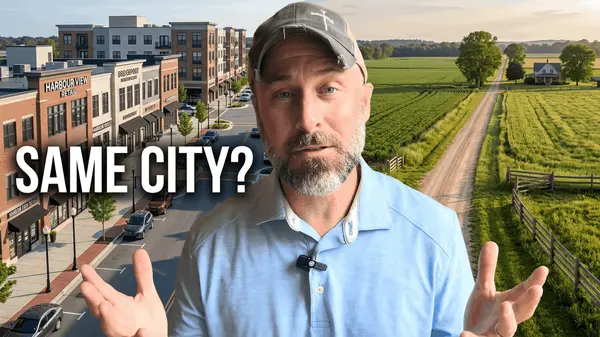
In growth areas—especially parts of Suffolk and Chesapeake—development can change an area quickly. That can be good (new amenities, improved roads, value support). It can also be annoying (construction noise, added traffic, changed vibe).
Before you buy:
-
Check zoning maps when available
-
Look for planned developments nearby
-
Pay attention to “coming soon” signs and infrastructure work
This isn’t about predicting the future perfectly. I don’t have a crystal ball. It’s about reducing surprises.
Practical takeaway: Spend 10 minutes checking what’s planned. It can save you years of “I wish I’d known.”
Community Vibe: The Most Underrated Neighborhood Test
This is the advice I repeat constantly because it works.
Drive by the home during the day and at night.
Both during the week and on the weekend.
You can change a lot about a house after you buy it—but location isn’t one of them.
Neighborhoods have rhythms. What feels quiet on a Tuesday afternoon can feel totally different on a Friday night. And you’re not judging. You’re observing patterns.
Look for:
-
Noise levels
-
Parking overflow
-
Traffic flow
-
Whether people are out walking
-
General consistency of upkeep
A house showing tells you about the house.
A weekend drive-by tells you about your future reality.
Practical takeaway: Don’t rely on one showing. The drive-by test catches more regrets than almost anything else.
Military & Relocation Strategy: How to Make Good Decisions Fast
If you’re PCSing into Hampton Roads, timing adds pressure—especially in spring.
And with PCS moves, you usually don’t get a redo on timing… which is exactly why strategy matters more than speed.
When time is tight:
-
Define non-negotiables early (commute boundaries, budget comfort, lifestyle needs)
-
Shortlist neighborhoods first, then shop houses within them
-
Use virtual tools smartly, but verify what matters in person when possible
I also go deeper on PCS timing and VA loan strategy in my video:
“Military Moves in Spring – How to Use Your VA Loan in Hampton Roads.”
It’s worth watching if you’re in that spring move window.
Practical takeaway: Preparation reduces stress. Clarity beats rushing.
For Current Homeowners: Why This Matters to You Too
If you already own in Hampton Roads, here’s the homeowner angle:
Buyers are more research-driven than ever. They are comparing neighborhoods—not just houses. They’re looking at commute times, school boundaries, future development, and lifestyle convenience.
So if you’re considering selling in 2026, two things matter:
-
Understanding your neighborhood’s strengths
-
Positioning those strengths clearly and honestly
If you’d like a quick home value update or a “how would my neighborhood perform today?” conversation, reach out. No pressure—just clarity.
Optional Local Spotlight: Suffolk Seaboard Coastline Trail
If you’re looking at Suffolk and you want an example of “lifestyle value,” the Suffolk Seaboard Coastline Trail is a great one.
Access to trails, green space, and walkability is the kind of quality-of-life factor that doesn’t show up in a listing description—but absolutely influences how a place feels day to day. And that matters for enjoyment and resale appeal.
Closing
If you’re moving to Hampton Roads and want the full breakdown, watch the video here:
Video: https://youtu.be/ootL4V-lWVs
Then grab my Relocation Guide here:
Relocation Guide: https://realtorjedwards.com/relocation-guide
And if you want to talk through your shortlist and strategy:
Book a discovery call: https://calendly.com/jedwrds/discovery-phone-call
Hashtags
#HamptonRoadsRealEstate #MovingToHamptonRoads #SuffolkVA #ChesapeakeVA #NorfolkVA #VirginiaBeachRealEstate #MilitaryRelocation #VALoan #FirstTimeHomeBuyer #RelocationGuide #PortsmouthVA #NewportNewsVA
Recent Posts